A voluntary network for every 4-H club across Africa.
The Africa Clover Network is a voluntary network of 4-H clubs and programmes across the African continent, bound together by the 4-H Principles. ACN connects, strengthens, and amplifies what 4‑H programmes are already doing and helps build stronger and more resilient clubs across the continent, working towards the global objective of growing youth from being ready to taking up leadership in a fast‑changing world.
what we are about
Positive youth development.
Our vision
A continent where every young African has the skills, values, and networks to transform their life, their community — and their world.
Our mission
To connect, strengthen, and expand 4‑H programming across Africa — equipping young people aged 5‑25 through hands‑on learning, mentorship, and community action.
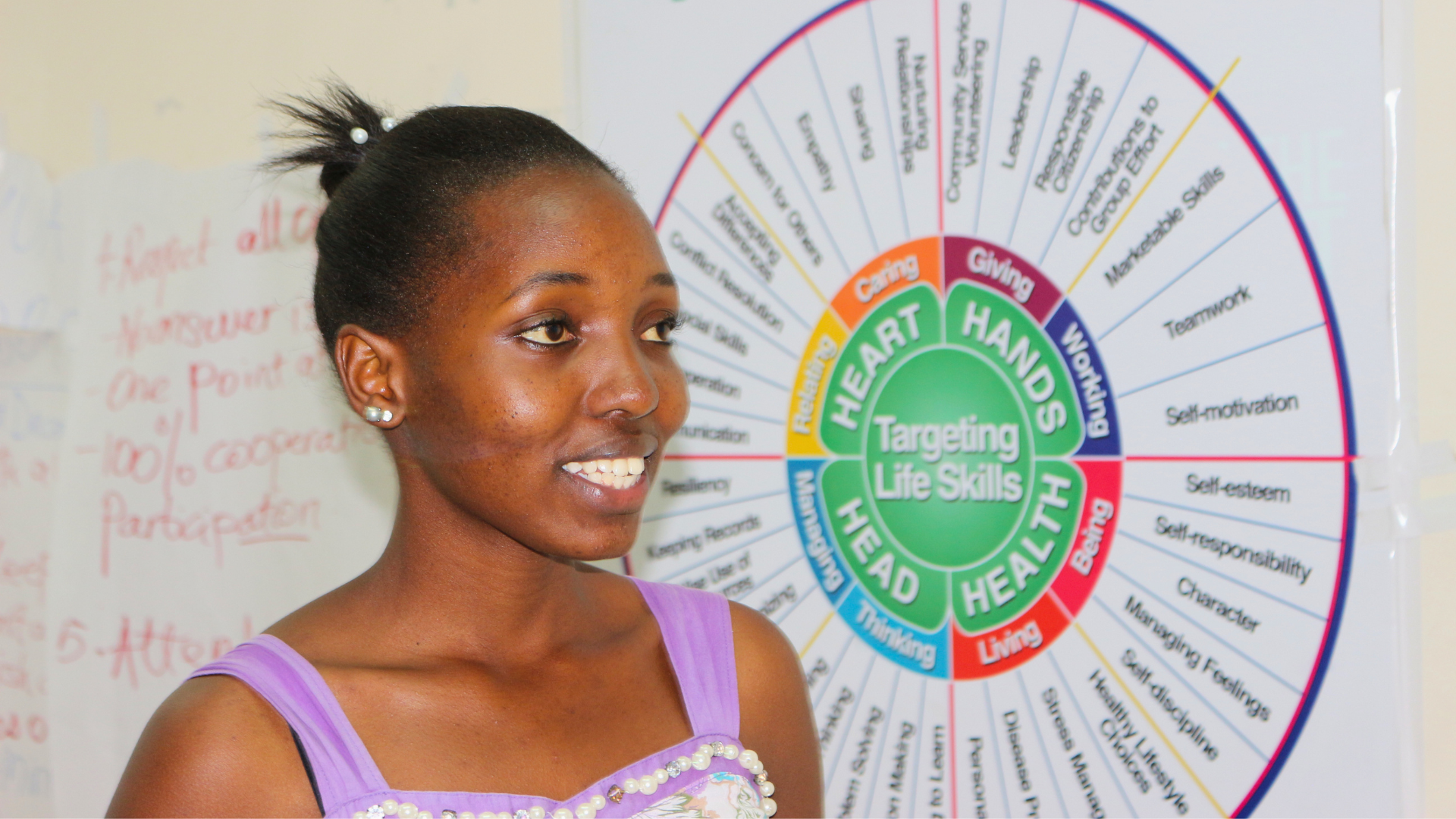
The four H's
Four dimensions. One whole person.
🧠
Head
Critical thinking, problem‑solving, and lifelong learning. Young people who question, analyse, and imagine better solutions.
❤️
Heart
Compassion, integrity, and community responsibility. Young people who care deeply about others and act accordingly.
✋
Hands
Practical skills, entrepreneurship, and community action. Young people who build things, grow things, and fix things.
🌿
Health
Physical, mental, and emotional wellbeing. Young people who understand and care for themselves and those around them.
The evidence · Positive Youth Development (PYD) Study
"Young people in 4‑H are more likely to thrive — in school, at home, and in their communities."
A landmark Positive Youth Development study tracking 4‑H participants found consistent, statistically significant advantages for young people in 4‑H programmes compared to peers in other youth organisations.
2×
more likely
To contribute positively to their communities compared to peers in other youth programmes
2×
more likely
To pursue science, engineering, or technology after school — fields that Africa urgently needs
3×
more likely
To make healthier choices and avoid risky behaviours during adolescence
2×
more likely
To participate in civic life and take on leadership roles in their communities
Source: 4-H Positive Youth Development Study (PYD). Longitudinal Study by Tufts University. Findings consistently replicated across multiple cohorts and countries.
ACN Strategic Plan 2026–2030 · What we are building toward
Our 2030 targets.
20
countries
Active national 4‑H member programmes formally affiliated with ACN by 2030
1M+
young people
Enrolled across all ACN member programmes on the continent by 2030
10K+
trained leaders
Volunteer and professional club leaders trained across the network by 2030
5
regional hubs
ACN coordination hubs across Africa's five sub‑regions by 2030
50%
gender target
Of all enrolled youth to be girls and young women, in every member programme
100%
pillar coverage
Every member programme delivering across all six ACN pillars by year 5
Our Work
Six pillars. One framework for the continent.
ACN's programming is organised around six strategic pillars, agreed by founding members and set out in the ACN Strategic Plan 2026–2030. Every member programme is encouraged to work across all six pillars — adapting them to local context, culture, and need. Pillar VI — Leadership, Innovation and Problem‑Solving — is a cross‑cutting pillar woven through all five thematic areas.
The six strategic pillars
What ACN programmes work on across Africa.
Each pillar is described below, with practical examples of what it means for member programmes on the ground.
#
Pillar
What this means in practice
I
Agriculture & food systems
Connecting young Africans to the land, to markets, and to the future of food — through hands‑on agri‑learning, enterprise development, and value‑chain skills. Covering crop production, livestock, aquaculture, agroecology, and agribusiness.
II
Science, technology & innovation
STEM learning, digital skills, earth observation, and emerging technology — equipping youth for the industries, institutions, and innovations Africa is building. Includes coding, data, space science, and applied research.
III
Climate & environment
Conservation, reforestation, rangeland stewardship, and climate adaptation — with young Africans as frontline environmental actors, not just beneficiaries. Covers dryland communities, pastoralist youth, and ecosystem restoration.
IV
Civic engagement & citizenship
Young people as active, informed citizens — participating in governance, accountability, and democratic life at community, national, and continental level. Includes voter education, community service, and rights‑based approaches.
V
Health & wellbeing
Holistic health for every young person: nutrition, mental health, reproductive health, substance prevention, and physical activity. Includes safe school environments, peer health education, and support for adolescent girls.
The cross‑cutting pillar. Embedded across all five thematic areas, this pillar develops young people who think critically, innovate locally, and lead with confidence — in their clubs, communities, and beyond.
How the pillars are delivered
ACN does not prescribe a single delivery model. Member programmes design their own activities and approaches, drawing on the six pillars as a shared framework. Common delivery modes across the network include:
• School‑based clubs meeting weekly or fortnightly
• Exchange programmes between national associations
• Community project camps and residential events
• Vocational training and enterprise incubation
• Mentorship and peer‑learning circles
• Digital and remote learning modules
• Competitions, showcases, and national challenges
• Community service and civic action projects
Priority Focus 1 · 2026
UN International Year of Rangelands and Pastoralists
Across Africa's arid and semi‑arid landscapes — from the Sahel to the Horn to the Kalahari — millions of young people in pastoral and dryland communities are underserved by youth programming. ACN's Strategic Plan names dryland and ASAL communities as a Phase 1 priority from Year 1, aligned with the UN International Year of Rangelands and Pastoralists 2026.
Read more →
Priority Focus 2 · 2026
4th Global 4‑H Network Summit · Taipei City, Taiwan 2–6 November 2026
Africa takes its seat at the global 4‑H table. For the first time, Africa will arrive not as individual delegations but as a continent with a coordinated voice: the Africa Clover Network. ACN's participation is a strategic priority to close the gap in global 4‑H representation and to present the ACN Strategic Plan to the world.
Read more →
Priority Focus 3 · 2026
Civic Engagement & Leadership
Between 2024 and 2027, more than 30 African countries will hold national elections — the most election‑intensive period in the continent's history. ACN reads this moment as a political opportunity structure to channel youth civic energy into structured participation, grounded in Pillar IV (Civic Engagement & Citizenship) and Pillar VI (Leadership).
Read more →
Member Programmes
The network is as strong as its members.
The ACN exists to support national 4-H programmes, clubs, and youth-serving organizations across the African continent. Different categories of membership are available, tailored for specific needs.
Who can become a member?
Open to every 4-H club and programme in Africa.
National Programmes
Targeting National 4-H Programmes and their Government affiliates, and PYD practitioners seeking continental affiliation, continuous professional development, quality assurance, peer learning, networking, and shared governance.
Register here…
School and University-Based Clubs
Targeting schools and academic institutions serving learners between the ages of 5 and 25 years. We support a wide range of youth-serving clubs focused on agriculture, conservation, forestry, leadership, space, and many more, looking for incremental development based on the positive youth development framework.
Register here…
Community Programmes
Targeting youth development programmes working with adolescents and youth under the age of 25 who are not within the formal education system. This includes faith-based, community and non-governmental organizations addressing disability issues, children in conflict with the law, refugee and migrant children and youth, street and homeless children and youth, and many more.
Register here…
Here's what membership offers:
Benefits of Africa Clover Network Membership
Joining the Africa Clover Network connects your programme to a continent-wide movement for positive youth development. Here's what membership offers:
For national programmes
• Continental identity and the ACN mark
• Peer learning exchanges with other national 4‑H bodies
• Access to continental programmes and competitions
• Shared curriculum frameworks and resource libraries
• Representation in ACN governance bodies
• Support for donor engagement and partnership development
For clubs and community programmes
• Connection to the Africa‑wide 4‑H network
• Access to ACN training and capacity building
• Participation in regional and continental events
• Peer mentorship and alumni connections
• Visibility through ACN communications channels
• Pathway to national association membership
2030 membership targets
20
Countries
Active national 4‑H member programmes formally affiliated with ACN
1M+
Young people
Enrolled across all ACN member programmes on the continent
10K+
Trained leaders
Volunteer and professional club leaders trained across the network
5
Regional hubs
ACN coordination hubs across Africa's five sub‑regions
News & Updates
Stories from across the network.
Stay connected with the Africa Clover Network. This page carries the latest from ACN, its member programmes, and the wider 4‑H Africa movement — from policy milestones and programme launches to stories of young people driving change in their communities.
Network news · April 2026
Partnership news · Agriculture & food systems · Pillar I
Bees, for people and planet: 4-H Kenya partners with FAO for World Bee Day 2026
Mombasa, Kenya · 20 May 2026
This May, 4‑H joined hands with the Food and Agriculture Organisation of the United Nations (FAO Kenya) to participate in Kenya's national World Bee Day 2026 celebrations in Mombasa — bringing school‑based beekeeping, youth‑led conservation, and the voice of pastoralist communities to one of the continent's most significant agri‑environmental platforms.
FMNR: 4-H, World Vision, and Restoration Warriors unite for World Environment Day in Kajiado
Kajiado County, Kenya · 5 June 2026
On World Environment Day 2026, the Africa Clover Network, 4‑H Kenya, World Vision Kenya, and Restoration Warriors Africa gathered in Kajiado County to mark youth‑led land restoration.
Read full story →
Join the Network
Join the network.
If you share the 4-H values, we invite you to a 5-year commitment through an annual subscription plan. Membership is currently free until August 10, 2026, for all three categories: National 4-H Programme, Schools & Clubs, and Community Programmes.
Who should join?
Three pathways to ACN Membership
National 4-H programmes
You have a national 4-H structure and want to connect with peer associations across the continent, access continental programming, and contribute to ACN governance.
Complete the national affiliation form and submit your organisation profile to the ACN Secretariat →
Schools and clubs
You run a 4-H club in a school or college. You want to connect your young people to the continental network, access shared resources, and participate in regional events.
Register your club through the ACN online portal. Approval is granted within 10 working days. →
Community programmes
You lead a community-based youth programme aligned with 4-H values. You may not be formally registered as a 4-H club, but you share the Head, Heart, Hands, Health philosophy.
Register your community programme through the ACN online portal. Approval is granted within 10 working days. →
Four pathways to partnership
Research & Academic Institutions
To ensure our programs remain evidence-based, we partner with academia for STEM program development, curriculum validation, youth development insights, and scientific grounding. We invite researchers to collaborate on impact assessments, longitudinal studies, and the creation of vocational certification pathways for our members.
Let's engage…
Private Sector & Employers
Join our Employer Alliance Network and help us to bridge the gap between education and employment. Co-create programmes with us that customise club sponsorships to your corporate objectives and ESG strategies, and provide job-shadowing & internship pipelines for our members.
Let's engage…
Development Partners & Sponsors
Your financial support enables us to build our institutional infrastructure, attract talent, participate in regional and Global 4-H exchanges and summits, facilitate knowledge transfer, fund research, and to maintain the quality of our programmes.
Let's engage…
Alumni Network
We invite 4-H alumni to give back through mentorship, resource mobilization, and by taking up leadership through board and advisory governance roles at both sub-national, national, regional, and continental levels.
Let's engage…
What happens after you join?
01
Your application is reviewed by the ACN Secretariat within 10 working days. You will receive a confirmation of receipt and a request for any outstanding information.
02
On approval, your club or programme is added to the ACN Member Register and issued an ACN membership certificate and the right to display the ACN mark.
03
You are introduced to your sub-regional coordinator and connected with peer programmes in your region through the ACN member network.
04
You receive access to the ACN Resource Library — curriculum frameworks, training guides, monitoring tools, and communications templates.
05
You are invited to participate in the next ACN regional gathering and the annual continental event — and to submit stories and updates to the ACN news platform.
Empowering Africa's youth is a collaborative mission.
Join us today, and together, let's invest in a generation ready to lead in a fast-changing world!
Our Principles
The principles every ACN member commits to.
These guiding principles define what membership in the Africa Clover Network means.
01 PRINCIPLE
Positive Youth Development
ACN creates context and content for positive youth development across Africa, subscribing to the essential elements of high-quality youth development proven to have impact. Every programme decision begins with the question: what does this young person need?
Young people first
ACN helps young Africans see themselves as unique, resilient, life-long learners who actively shape their own futures — setting personal goals, practicing self-determination, and building the agency to lead change in their communities.
Evidence-driven
ACN values results-driven educational opportunities grounded in cutting-edge youth development research. Programming is evaluated against the Positive Youth Development (PYD) evidence base, adapted and built upon in the African context.
Self-determination
ACN believes young people are the primary actors in their own development. Programmes do not deliver outcomes to young people — they create the conditions within which young people achieve those outcomes for themselves.
The six C's
ACN outcomes are the five C's: Competence, Confidence, Character, Connection, and Caring. A sixth C — Contribution — emerges when the other five are present. This is the highest outcome of Positive Youth Development.
The 4-H Framework
The Six C's of 4-H
C
Competence
Skills and knowledge to act effectively in the world
C
Confidence
An internal sense of self-worth and belief in one's ability
C
Character
Integrity, moral courage, and a sense of responsibility
C
Connection
Positive bonds with people, institutions, and community
C
Caring
Empathy, compassion, and commitment to others
C
Contribution
Emerges when all five preceding C's are present. The highest outcome.
02 PRINCIPLE
Partnerships & Solidarity
ACN does not work alone. The network is built on the conviction that the strongest youth development happens when governments, communities, universities, and the private sector act together — with young people, not for them.
GLOBAL 4-H MOVEMENT
ACN is proud to stand within the worldwide 4‑H family — including 4‑H USA and Canada, national programmes in Asia, Europe, the Pacific, and beyond. We share the four-leaf clover, the four H's, and a commitment to every young person on earth.
AFRICAN GOVERNMENTS
ACN builds formal relationships with national and local governments across Africa — working within official youth, agriculture, education, and environment frameworks to strengthen, not duplicate, what governments provide.
AFRICAN UNIVERSITIES
ACN builds its research and evidence base through linkages between Global 4‑H academic partners and African universities and research institutions — ensuring the knowledge informing our programmes follows sound PYD science and is adapted to Africa's context and socio-development priorities.
PRIVATE SECTOR
ACN creates structured connections between youth programmes and employers, businesses, cooperatives, and entrepreneurs — so that the skills young people build translate into real economic opportunity.
YOUTH AND ADULTS TOGETHER
ACN connects young people and caring adults as equal partners in planning, delivery, and evaluation. Volunteers are critical to the network — we invest in their development with the same seriousness as youth programming.
CIVIL SOCIETY
ACN creates connections between member programmes and community organisations, non-profits, schools, and faith communities — building a broad ecosystem of support around every young person in the network.
03 PRINCIPLE
Intentional Learning
4-H in Africa does not happen by accident. Every programme experience is designed — with care, with purpose, and with the young person's full development in view. ACN engages the broader community in supporting youth development and involves young people in building stronger communities through agriculture, science, healthy living, and citizenship education.
Community-rooted
ACN programmes are embedded in — and accountable to — the communities they serve. We draw on the rich knowledge systems present across Africa, not only those documented in formal academic literature.
Designed with purpose
ACN designs challenging and interesting experiences with careful consideration given to the depth of content, cultural relevance, age-appropriateness, and the local context. Cookie-cutter programmes have no place in ACN.
Formal and informal
ACN integrates the knowledge, skills, and behaviours of both formal education and non-formal community learning — recognising that African young people learn in classrooms, in fields, in markets, and around fires, and that all of these are valid sites of development.
Life skills
ACN builds life skills in youth and the adults who work alongside them — because the best youth development happens in community, when the whole environment is oriented toward growth.
Youth as designers
ACN involves young people and adults together in developing and evaluating learning experiences. Young Africans are not the subjects of our programmes — they are their architects.
Adaptive and evolving
ACN evolves to meet the changing interests and needs of Africa's young people. The continent is not static — ACN's programmes will not be either. Member programmes are expected to review, reflect, and adapt continuously.
04 PRINCIPLE
Developing Youth Potential
ACN believes every young African has potential worth developing. Not some. Not those with the right background, the right language, or the right geographical location. Everyone.
Culturally grounded
ACN matches the needs, interests, abilities, and cultural norms of young people, their families, and their communities. Programming that ignores African cultural reality does not belong in this network.
African expertise
ACN prioritises African leadership. From professionals, researchers, and community leaders. We invest in African expertise — not as a substitute for global exchange, but as the foundation for it.
No ceiling
ACN believes that all young people — as members of families, communities, and citizens of a global society — should have the opportunity to reach their full potential. Geography, gender, and economic status notwithstanding.
Safety and wellbeing
ACN values the safety and wellbeing of every child, young person and adult in the network. Safe schools, safe clubs, and safe community spaces are non-negotiable conditions for good youth development.
4-H programming is inclusive and embraces diversity. Across 54 countries, 2,000+ languages, every religion, ethnicity, race, and culture the continent holds — we are inclusive.
Discrimination on any basis has no place in 4-H.
Priority Focus 1 · 2026
UN International Year of Rangelands and Pastoralists 2026
Across Africa's arid and semi-arid landscapes — from the Sahel to the Horn to the Kalahari — millions of young people in pastoral and dryland communities are underserved by youth programming. These are communities that have stewarded some of the continent's most ecologically complex territories for generations: grasslands, shrublands, and rangelands that together cover more than half of Africa's land surface and support the livelihoods of over 300 million people. Yet structured youth development has rarely followed them there.
ACN's Strategic Plan names dryland and ASAL communities as a Phase 1 priority from Year 1, aligned with the UN International Year of Rangelands and Pastoralists 2026. Pillar III (Climate & Environment) and Pillar I (Agriculture & Food Systems) have specific programming tracks for pastoral and dryland contexts — but 2026 demands that we move across all six pillars simultaneously, bringing the full depth of 4-H's Positive Youth Development approach to communities that have long been excluded from it.
In Agriculture & Food Systems, young pastoralists will engage with indigenous livestock management practices alongside modern veterinary knowledge, beekeeping enterprises adapted to dryland flora, and farmer-managed natural regeneration — FMNR — initiatives that have transformed degraded lands across the Sahel and are now spreading eastward. In Climate & Environment, ACN member programmes will develop youth-led rangeland monitoring systems, engage young people in community-level adaptation planning, and equip emerging leaders to access climate finance mechanisms, including the Africa Climate Change Fund and national adaptation funds, on behalf of their communities.
Science, Technology, and Innovation programming will bring remote-sensing literacy to young pastoralists — helping communities map grazing routes, track vegetation cover, and document land rights using tools that were, until recently, inaccessible to them. Health & Wellbeing programming will address the disproportionate burden carried by young people — and young women in particular — in pastoral economies: the livestock losses to disease, the distance from health services, the acute vulnerability to climate shocks.
Across Civic Engagement and Leadership, ACN will support young pastoralists and rangeland community members to engage with land governance processes, tenure rights frameworks, and the inter-governmental negotiations that shape the policies governing their lives.
The International Year of Rangelands and Pastoralists is a political moment as much as a programmatic one. ACN intends to use it as both — partnering with governments, FAO, IFAD, indigenous peoples' organisations, and civil society to ensure that the young people who inherit Africa's drylands are not only surviving them, but shaping their future.
Priority Focus 2 · 2026
4th Global 4‑H Network Summit Taipei City, Taiwan 2–6 November 2026
Africa takes its seat at the global 4-H table.
In November 2026, Taipei City will host the 4th Global 4-H Network Summit — the most significant convening of the worldwide 4-H movement in a generation. Representatives from national 4-H programmes across six continents will gather to share research, forge partnerships, and set the direction of youth development practice globally. For the first time in the Summit's history, Africa will arrive not as individual delegations but as a continent with a coordinated voice: the Africa Clover Network.
ACN's participation in Taipei is a strategic priority, not a ceremonial one. Africa is home to the world's youngest and fastest-growing population — yet African youth development programmes have historically been under-represented in global 4-H spaces. The Taiwan Summit is the moment ACN closes that gap. Member programmes will compete in the National 4-H Challenge, with national competition winners selected as continent delegates. The Africa Clover Network will use the Summit platform to present the ACN Strategic Plan 2026–2030, recruit new member programmes from West, Central, and North Africa, and establish formal knowledge-exchange agreements with peer 4-H bodies in Asia, the Americas, and Europe.
Taiwan 2026 sits at the intersection of all six ACN pillars — but it is Pillar VI (Leadership, Innovation and Problem-Solving) that it most powerfully serves. The young Africans who reach Taipei will return as continental ambassadors — carrying global best practice, international networks, and the lived experience of representing Africa on the world stage. ACN is actively fundraising for delegation participation and welcomes partners who share the conviction that African youth belong at the centre of global conversations, not at their margins.
Priority Focus 3 · 2026
Civic Engagement & Leadership Africa's election intensive season
The energy is there. The question is where it goes.
Between 2024 and 2027, more than 30 African countries will hold national elections — the most election-intensive period in the continent's democratic history. Simultaneously, a wave of youth-led protest movements has swept from Nairobi to Dakar, Kampala to Accra: young people demanding accountability, transparency, and a reallocation of public resources toward their futures. From Kenya's Generation Z demonstrations of 2024–2025 — in which hundreds of young people faced terrorism charges for constitutionally protected protest — to similar uprisings across Uganda, Senegal, and beyond, the message from Africa's youth is consistent and urgent: they are paying attention, and they expect their governments to do the same.
ACN reads this moment not as a crisis to be managed, but as a political opportunity structure — a window in which the civic energy of African youth is high, and the conditions for converting protest into participation are exceptionally favourable. Research is clear: young people who engage in structured civic learning programmes are more likely to vote, more likely to hold officials accountable, and more likely to stand for leadership themselves. 4-H's Positive Youth Development framework — with its documented outcomes of 2× greater civic participation and 2× greater community contribution — is precisely the infrastructure Africa needs to channel this energy constructively. The goal is not to suppress protest or substitute it with sanitised participation: it is to ensure that young Africans have both the rights and the tools to act across every democratic space available to them.
ACN's response is grounded in Pillar IV (Civic Engagement & Citizenship) and Pillar VI (Leadership, Innovation and Problem-Solving). In 2026, ACN member programmes are developing civic literacy curricula, community accountability forums, and voter education modules adapted for young first-time voters aged 18–25 — with particular attention to young women, pastoralist communities, and youth in fragile or post-conflict settings who face the highest barriers to participation. ACN does not do politics. It does citizenship — the deeper, more durable form of democratic engagement that outlasts any single election cycle, and that is built, one young person at a time, through the H that matters most right now: Heart.
Partnership news · Agriculture & food systems · Pillar I
Bees, for people and planet: 4-H Kenya partners with FAO for World Bee Day 2026
Mombasa, Kenya · 20 May 2026
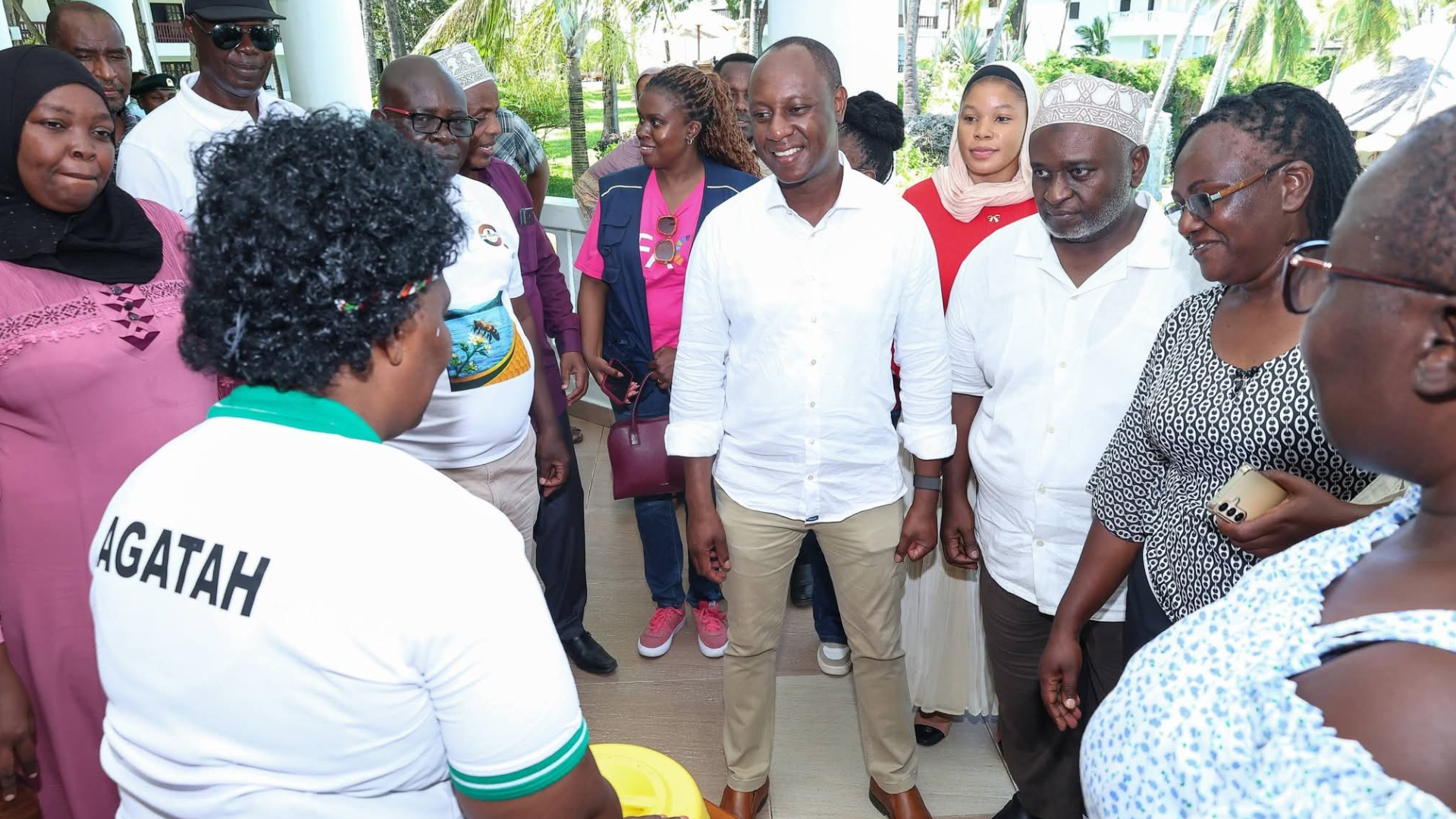
This May, 4‑H joined hands with the Food and Agriculture Organisation of the United Nations (FAO Kenya) to participate in Kenya's national World Bee Day 2026 celebrations in Mombasa — bringing school‑based beekeeping, youth‑led conservation, and the voice of pastoralist communities to one of the continent's most significant agri‑environmental platforms.
World Bee Day, marked annually on 20 May, is the United Nations' global platform for recognising the essential role of bees and pollinators in food security, biodiversity, and sustainable agriculture. Kenya's 2026 national celebrations, held under the theme "Bee Together for People and the Planet," brought together government ministries, development agencies, research institutions, private sector actors, and communities from across the country. 4‑H Kenya was the only school‑based youth development programme with a formal delegation at the event — a distinction that underscores both the depth of the organisation's programming and the strength of its partnership with FAO Kenya.
FAO Kenya's facilitation support enabled the participation of three 4‑H Kenya clubs representing ASAL regions in Kajiado, Machakos, and Kitui counties: Simon Sosoika (Nairrabala Primary), Boniface Mutunga (Kithendu Primary), and Agatah Munyiri (Kwasilu Primary). Each club carried its own story of youth‑led change. Nairrabala Primary in Kajiado — situated within a pastoralist conservation landscape adjacent to the Kikesen River Conservancy — has integrated beekeeping with indigenous rangeland stewardship. Kwasilu Primary in Kitui runs a Pollinators' Club focused on honey value addition, with learners actively involved in production, processing, and rudimentary marketing. Kithendu Primary in Machakos has combined agroforestry with tree‑seedling enterprise along the historic Yatta Furrow irrigation corridor.
“The 4‑H delegation was the only school‑based programme at the event. That visibility matters — not for us, but for the young people who now know that their beekeeping work is part of a national conversation.”
— Sheila Mwende Mulili, CEO & Executive Director, 4‑H Kenya
Over three days, delegation members participated in the national exhibition, presenting their school programmes to government officials, development agency representatives, and fellow practitioners. Ms. Agatah Munyiri joined a panel discussion on youth and beekeeping livelihoods as the only representative from the government‑employed teacher cohort among the panelists — a moment that placed school‑based youth programming squarely within the professional apiculture conversation. The event also generated significant global media reach, with FAO's dissemination of footage from the celebrations amplifying the visibility of Kenya's youth‑led agri‑environmental work to international audiences.
The three days in Mombasa were as much about building the future as about celebrating the present. The delegation established contact with eleven key organisations and individuals, including the Apiculture Association of Kenya (AAK), the Oasis Nectar Network, the Pest Control Products Board (PCPB), the National Bee Institute, the Narok Beekeepers Association, and the International Plant Protection Exchange (IPHEX). These relationships open pathways for curriculum integration, joint training, market access, and policy engagement that will benefit 4‑H Kenya's school programmes well beyond May 2026.
For the Africa Clover Network, World Bee Day 2026 marks an important moment in the operationalisation of its first priority focus: the expansion of 4‑H programming in rangeland and pastoralist communities of Africa. The themes of the 2026 World Bee Day — pollinator health, ecosystem services, sustainable land management, and rural livelihoods — sit precisely at the intersection of Pillar I (Agriculture & Food Systems) and Pillar III (Climate & Environment) in the ACN Strategic Plan 2026–2030.
The ACN seeks to strengthen the partnership between 4‑H and FAO Kenya to other African countries with FAO presence. Click here to access the 4-H Pollinator Toolkit. Plans are underway to partner with the State Department of Livestock Development to integrate beekeeping into the 4‑H Patrons training in August 2026. Are you interested in launching a 4‑H Pollinator Club? Get in touch with us for support!
AT A GLANCE: 4-H KENYA AT WORLD BEE DAY 2026
Event: World Bee Day 2026 National Celebrations, Mombasa, Kenya
Date: 20 May 2026 (3‑day programme, 18–20 May 2026)
Theme: "Bee Together for People and the Planet"
Delegation: 6 participants from 3 counties (Kajiado, Machakos, Kitui)
FMNR: 4-H, World Vision, and Restoration Warriors unite for World Environment Day in Kajiado
Kajiado County, Kenya · 5 June 2026
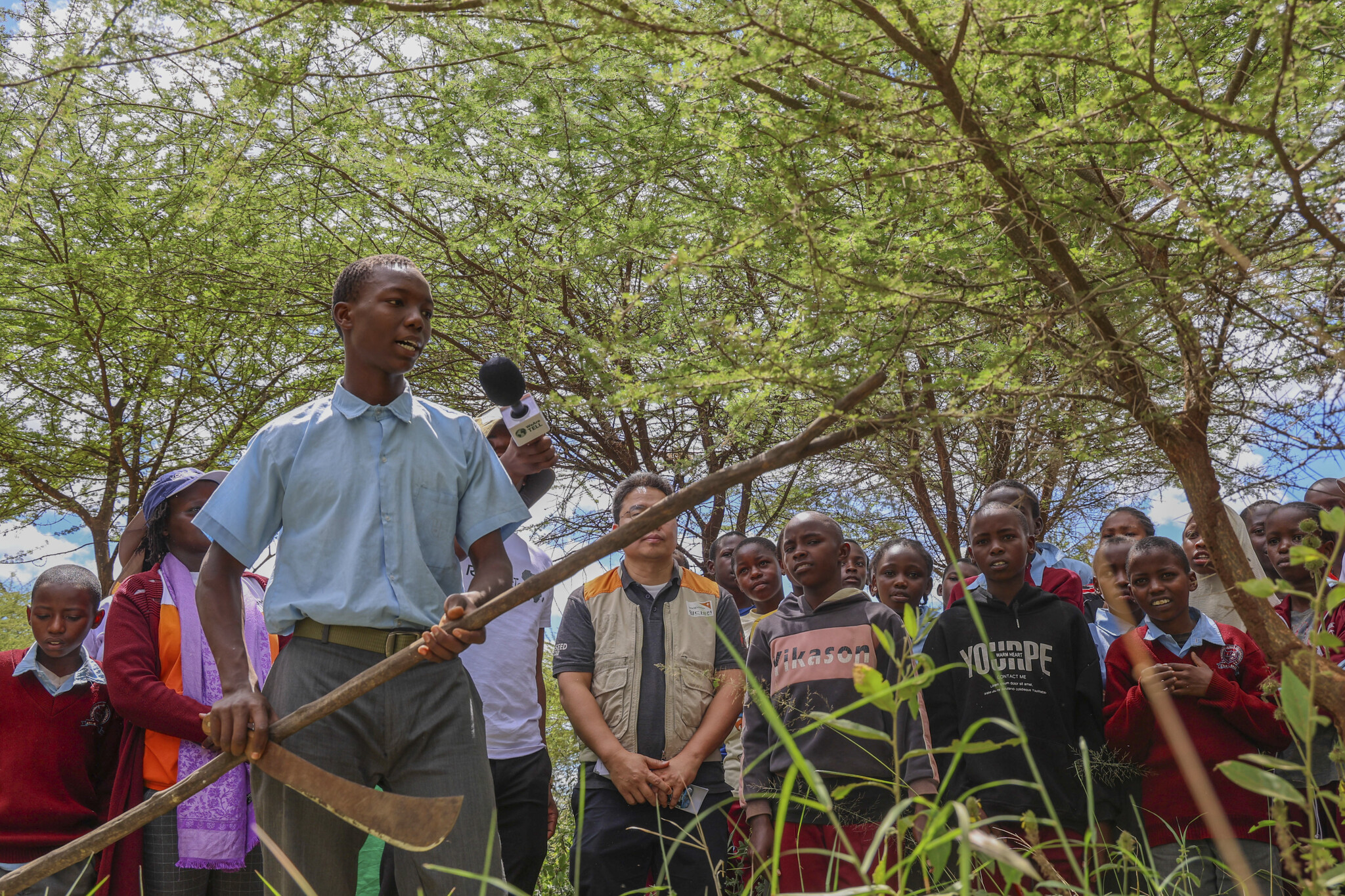
On World Environment Day 2026, the Africa Clover Network, 4‑H Kenya, World Vision Kenya, and Restoration Warriors Africa gathered in Kajiado County to mark youth‑led land restoration.
World Environment Day — marked on 5 June each year under the auspices of the United Nations Environment Programme — is the world's principal platform for raising awareness and driving action on environmental challenges. In 2026, the day carries particular resonance across Africa's drylands: the UN International Year of Rangelands and Pastoralists places the ecological and economic health of pastoral landscapes — and the communities that tend them — at the centre of global sustainability conversations. For the Africa Clover Network, whose Strategic Plan names rangeland and ASAL communities as a Phase 1 priority from its first year of operation, there could be no more fitting moment to act.
At Eng'aboli Primary School, a World Vision Kenya site, 4‑H learned first hand about student‑led Farmer‑Managed Natural Regeneration (FMNR), a powerful and increasingly proven methodology for managing fragile arid and semi‑arid environments. Pioneered by agronomist Tony Rinaudo and now practised across millions of hectares in the Sahel and East Africa, FMNR is a low‑cost, high‑impact land restoration technique through which farmers and communities systematically protect and manage the natural regrowth of trees and shrubs from existing root systems. Unlike conventional tree‑planting programmes — which depend on external nursery supply, significant labour, and ongoing irrigation — FMNR works with what the land already holds, dramatically increasing success rates and reducing costs while restoring soil health, water retention, biodiversity, and fodder availability for livestock.
The Africa Clover Network has an ongoing partnership with Restoration Warriors Africa, founded by internationally recognised youth environmentalist Ms. Anita Soina, to identify and scale up 4‑H clubs across pastoralist and rangeland regions of Africa. 4‑H brings the Positive Youth Development Model and school‑based club approach, pan‑African network of patron‑teachers and learner clubs, required to provide the structured, age‑appropriate learning infrastructure through which ecological knowledge can be converted into sustained community practice.
“FMNR is not just a project. It is a life‑long practice. When young people learn it, they carry it home, to their shambas, to their communities, to the next generation. That is how arid and semi‑arid landscapes will be transformed sustainably.”
— Anita Soina, Founder, Restoration Warriors Africa
For the Africa Clover Network, the decision to formally integrate FMNR into 4‑H programming is both a technical choice and a strategic one. The majority of Africa's land area falls within arid and semi‑arid zones, and the majority of Africa's livestock — and a significant proportion of its food production — depends on rangeland ecosystems that are under accelerating stress from climate change, land degradation, and overgrazing. Yet the young people who grow up in these landscapes are rarely at the centre of restoration efforts. FMNR changes that equation: it is practiced by ordinary land users, it requires no external inputs beyond knowledge and commitment, and it produces results that are visible within seasons, not decades.
The integration of FMNR into 4‑H programming will operate primarily through Pillar III (Climate & Environment) and Pillar I (Agriculture & Food Systems) of the ACN Strategic Plan 2026–2030, with strong connections to Pillar VI (Leadership, Innovation and Problem‑Solving) as patron‑teachers and youth members are trained to lead FMNR implementation in their own schools and communities. We are happy to onboard Eng'aboli Primary School and other World Vision supported FMNR sites across Kenya as 4‑H clubs, as we also scale up FMNR across all 4‑H clubs in ASAL regions across Africa. Click here to explore the World Vision FMNR school curriculum for your country.
The collaboration with World Vision Kenya brings an important community‑protection dimension to the work. World Vision's child‑centred community development model, its relationships with Maasai community structures, and its safeguarding frameworks complement 4‑H Kenya's school‑based programming. We hope to explore this partnership beyond Kenya for the benefit of all 4‑H programmes in countries where World Vision runs the FMNR programme.
AT A GLANCE: WORLD ENVIRONMENT DAY 2026 — KAJIADO
Event: World Environment Day 2026
Date: 5 June 2026
Location: Kajiado County, Kenya
Collaborating organisations: 4‑H Kenya, Africa Clover Network, World Vision Kenya, Restoration Warriors Africa