FMNR: 4-H, World Vision, and Restoration Warriors unite for World Environment Day in Kajiado
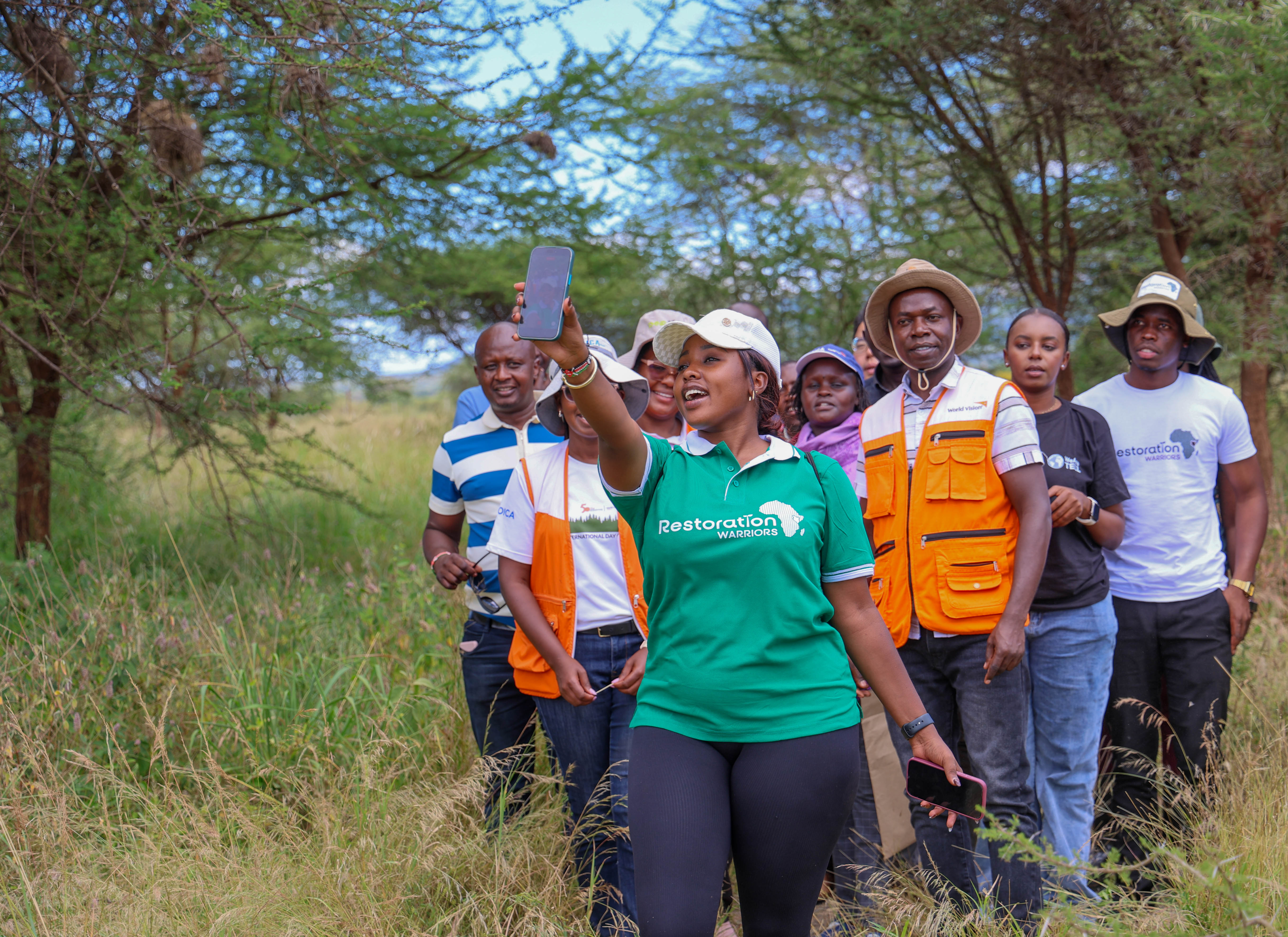
On World Environment Day 2026, the Africa Clover Network, 4‑H Kenya, World Vision Kenya, and Restoration Warriors Africa gathered in Kajiado County to mark youth‑led land restoration.
World Environment Day — marked on 5 June each year under the auspices of the United Nations Environment Programme — is the world's principal platform for raising awareness and driving action on environmental challenges. In 2026, the day carries particular resonance across Africa's drylands: the UN International Year of Rangelands and Pastoralists places the ecological and economic health of pastoral landscapes — and the communities that tend them — at the centre of global sustainability conversations. For the Africa Clover Network, whose Strategic Plan names rangeland and ASAL communities as a Phase 1 priority from its first year of operation, there could be no more fitting moment to act.
At Eng'aboli Primary School, a World Vision Kenya site, 4‑H learned first hand about student‑led Farmer‑Managed Natural Regeneration (FMNR), a powerful and increasingly proven methodology for managing fragile arid and semi‑arid environments. Pioneered by agronomist Tony Rinaudo and now practised across millions of hectares in the Sahel and East Africa, FMNR is a low‑cost, high‑impact land restoration technique through which farmers and communities systematically protect and manage the natural regrowth of trees and shrubs from existing root systems. Unlike conventional tree‑planting programmes — which depend on external nursery supply, significant labour, and ongoing irrigation — FMNR works with what the land already holds, dramatically increasing success rates and reducing costs while restoring soil health, water retention, biodiversity, and fodder availability for livestock.
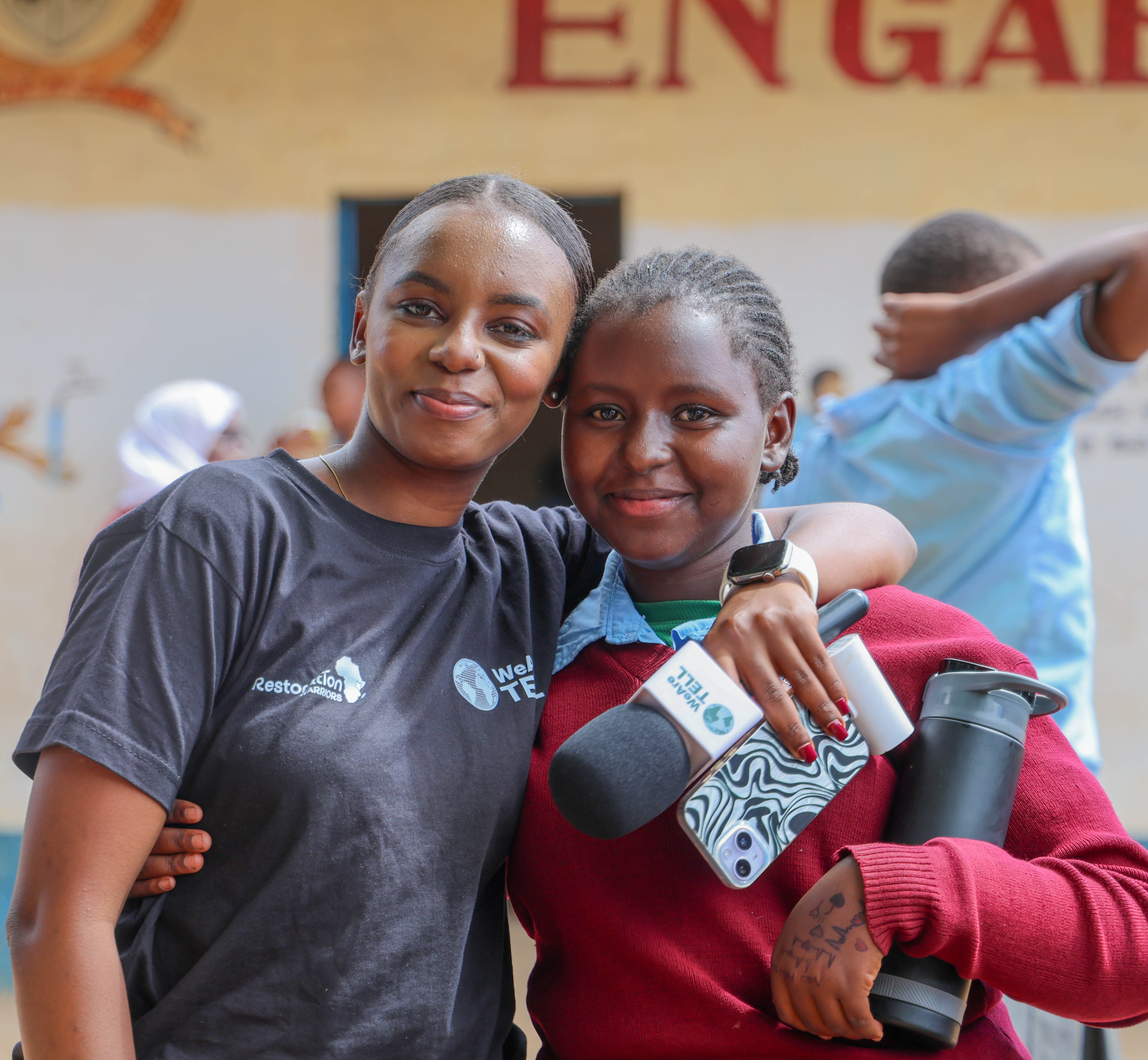
The Africa Clover Network has an ongoing partnership with Restoration Warriors Africa, founded by internationally recognised youth environmentalist Ms. Anita Soina, to identify and scale up 4‑H clubs across pastoralist and rangeland regions of Africa. 4‑H brings the Positive Youth Development Model and school‑based club approach, pan‑African network of patron‑teachers and learner clubs, required to provide the structured, age‑appropriate learning infrastructure through which ecological knowledge can be converted into sustained community practice.
“FMNR is not just a project. It is a life‑long practice. When young people learn it, they carry it home, to their shambas, to their communities, to the next generation. That is how arid and semi‑arid landscapes will be transformed sustainably.”
For the Africa Clover Network, the decision to formally integrate FMNR into 4‑H programming is both a technical choice and a strategic one. The majority of Africa's land area falls within arid and semi‑arid zones, and the majority of Africa's livestock — and a significant proportion of its food production — depends on rangeland ecosystems that are under accelerating stress from climate change, land degradation, and overgrazing. Yet the young people who grow up in these landscapes are rarely at the centre of restoration efforts. FMNR changes that equation: it is practiced by ordinary land users, it requires no external inputs beyond knowledge and commitment, and it produces results that are visible within seasons, not decades.
The integration of FMNR into 4‑H programming will operate primarily through Pillar III (Climate & Environment) and Pillar I (Agriculture & Food Systems) of the ACN Strategic Plan 2026–2030, with strong connections to Pillar VI (Leadership, Innovation and Problem‑Solving) as patron‑teachers and youth members are trained to lead FMNR implementation in their own schools and communities. We are happy to onboard Eng'aboli Primary School and other World Vision supported FMNR sites across Kenya as 4‑H clubs, as we also scale up FMNR across all 4‑H clubs in ASAL regions across Africa. Click here to explore the World Vision FMNR school curriculum for your country.
The collaboration with World Vision Kenya brings an important community‑protection dimension to the work. World Vision's child‑centred community development model, its relationships with Maasai community structures, and its safeguarding frameworks complement 4‑H Kenya's school‑based programming. We hope to explore this partnership beyond Kenya for the benefit of all 4‑H programmes in countries where World Vision runs the FMNR programme.
AT A GLANCE: WORLD ENVIRONMENT DAY 2026 — KAJIADO
- Event: World Environment Day 2026
- Date: 5 June 2026
- Location: Kajiado County, Kenya
- Collaborating organisations: 4‑H Kenya, Africa Clover Network, World Vision Kenya, Restoration Warriors Africa
- Key methodology: Farmer‑Managed Natural Regeneration (FMNR)
- Pillar focus: Pillar III (Climate & Environment), Pillar I (Agriculture & Food Systems), Pillar VI (Leadership)
- Strategic alignment: ACN Priority Focus 1 — Expansion of 4‑H programmes in Rangeland and Pastoralist Communities
- Alignment: UN International Year of Rangelands and Pastoralists 2026
- Pilot school: Eng'aboli Primary School, Kajiado County